Facial Filler Injection Zones: Anatomical Safety Map & Where Fillers Work Best
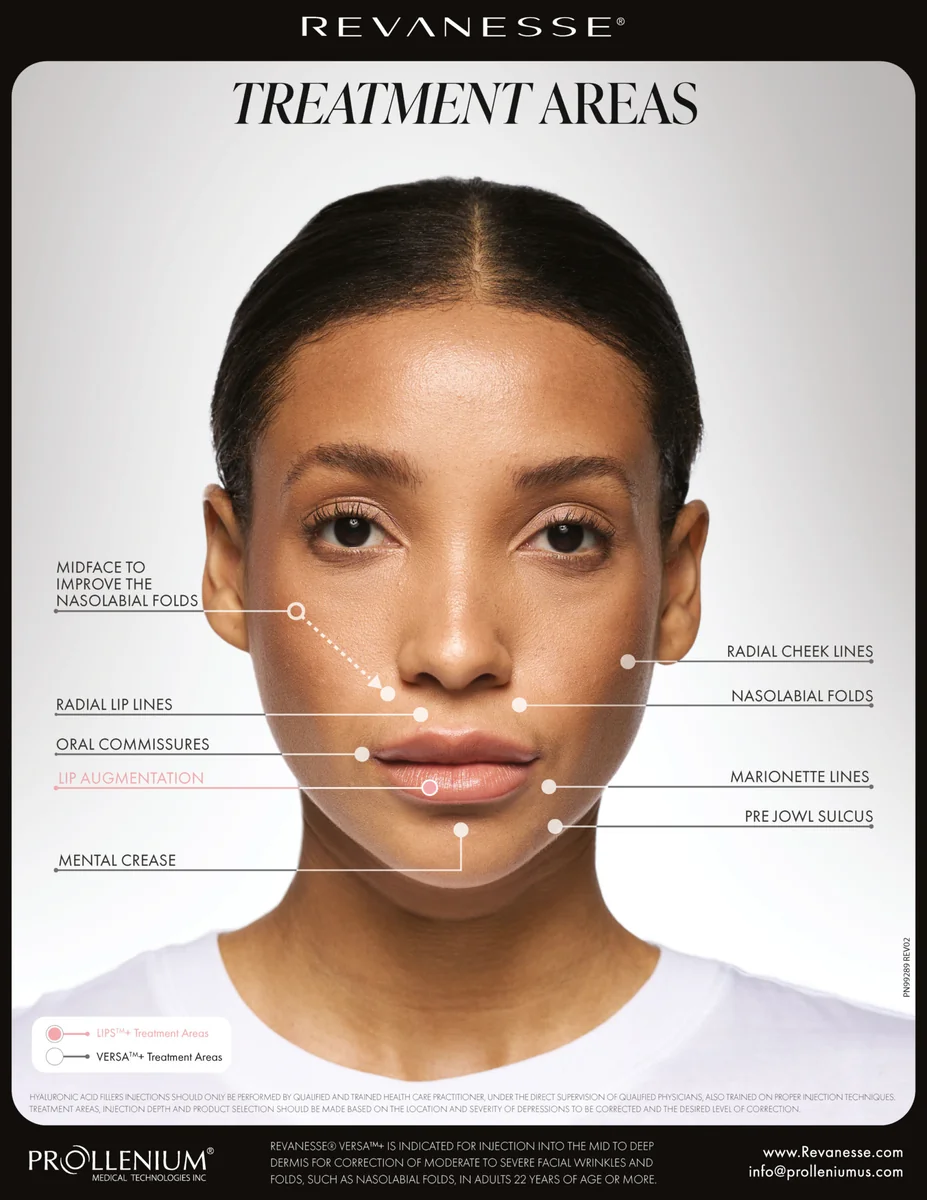
Clinical facial mapping diagram detailing primary dermal filler indications, target treatment areas, and anatomical vector lines.
Executive Summary
Dermal fillers restore lost bone, fat compartments, and structural support across distinct facial vectors. Understanding where fillers excel—and where high-risk vascular danger zones exist—is essential for patient safety.
Key Clinical Realities:
- ✓High-Safety Zones: Lateral cheek arches and the chin apex are safer zones because filler is deposited deep on the periosteal bone away from major arteries.
- ✓Arterial Danger Zones: The glabella (between brows) and nasal dorsum connect directly to ophthalmic vasculature, posing risks of vascular occlusion.
- ✓Dynamic Vectors: Modern injectors treat the lateral midface first to lift nasolabial folds indirectly, avoiding heavy filler buildup in the lower face.
Facial Anatomy as a Three-Dimensional Canvas
Facial aging is not merely a surface skin phenomenon; it involves bone resorption, deep fat pad atrophy, ligament laxity, and superficial tissue descent. Modern aesthetic medicine uses hyaluronic acid fillers as structural boluses to restore volume loss and recreate youth-enhancing light reflections.
However, facial vasculature is intricately interconnected. Knowing where fillers can be safely placed—and where high-risk arterial danger zones exist—is essential for every aesthetic consumer.
Primary Treatment Zones & Clinical Objectives
Dermal fillers are FDA-approved and clinically utilized across several distinct facial vectors:
- Midface & Lateral Cheeks: Rebuilding the zygomatic arch provides lateral tension that subtly lifts the lower face and restores youthful heart-shaped facial proportions.
- Nasolabial Folds & Marionette Lines: Softening the depressions framing the mouth caused by midface descent. Modern technique avoids over-filling these folds directly to prevent a muzzle-like appearance.
- Lips & Oral Commissures: Enhancing vermilion border definition, restoring philtral column height, and elevating downturned mouth corners.
- Chin & Mandibular Jawline: Projecting a retruded chin improves profile balance and creates structural separation between the neck and jawline.
High-Risk Vascular Danger Zones
Certain facial zones require exceptional clinical expertise because branches of the facial and ophthalmic arterial systems traverse superficial planes:
- The Glabella & Forehead: The supratrochlear and supraorbital arteries connect directly to the ophthalmic system. Accidental intravascular injection in this area carries severe risk of skin necrosis and irreversible vision loss.
- The Nasal Ala & Piriform Aperture: The angular artery runs close to the nostril base. Injecting nasolabial folds requires careful depth control to avoid arterial cannulation.
- The Tear Trough / Infraorbital Hollow: The delicate skin and complex vascular plexus require specialized low-hydrophilic fillers and blunt microcannulas.
Related Aesthetic Guides
Patient Safety & Provider Standards
Frequently Asked Questions
What are the safest areas for dermal filler?
The lateral zygomatic cheek arch and the chin/jawline are generally considered lower risk because injectors place product deep on the bone (supraperiosteal) away from major superficial facial arteries.
What is the most dangerous zone for facial filler?
The glabella (between the eyebrows) and the nasal dorsum (liquid rhinoplasty) carry the highest risk of vascular occlusion and blindness due to direct anastomosis with the ophthalmic artery.
Can dermal filler fix smile lines (nasolabial folds)?
Yes, but modern injectors often treat midface cheek volume loss first to lift the cheek vector, only placing conservative filler directly into the nasolabial fold if deep creases remain.
How does an injector avoid hitting a facial artery?
Qualified injectors use extensive anatomical training, slow low-pressure extrusion, aspiration checks, and blunt-tip microcannulas in high-risk zones to avoid intravascular injection.
Editorial and Clinical Review: Content on Medical Spa Providers is for informational, educational, and consumer-vetting purposes only and does not constitute formal medical advice. All aesthetic procedures carry risks of swelling, bruising, vascular complications, or asymmetry. Always schedule an in-person consultation with a licensed prescribing healthcare provider before undergoing clinical aesthetic treatments.
For med spa owners
Own a med spa? Get on the register.
People compare providers here by rating and services. Make sure your listing is present, current, and correct — it's free.