Microneedling
Microneedling is a minimally invasive collagen-induction therapy that uses medical-grade motorized micro-needles to create thousands of microscopic, vertical channels in the epidermis and dermis. This controlled micro-injury triggers the body's natural wound-healing response, stimulating fibroblasts to produce fresh type I collagen, elastin, and hyaluronic acid without damaging the outer epidermal layer.
People frequently turn to microneedling to treat textural irregularities, enlarged pores, surgical or acne scars, fine lines, and sun damage. Because it relies on natural cellular regeneration rather than heat or chemicals, it is safe for all Fitzpatrick skin types (I-VI). Modern medical spas offer both classic mechanical microneedling (using devices like SkinPen or Cytopen) and advanced radiofrequency (RF) microneedling (such as Morpheus8 or Sublative RF).
Sessions
A clinical series of 3 to 6 sessions spaced 4 to 6 weeks apart delivers cumulative textural remodeling, followed by semi-annual maintenance.
Downtime
1 to 3 days of mild erythema and a sunburn sensation. Most patients resume work and normal social activities the following day.
Results timeline
An immediate post-treatment glow appears within 5-7 days; true structural collagen remodeling continues to build for 3 to 6 months post-series.
Typical cost
Standard medical microneedling typically ranges from $250 to $450 per session. Radiofrequency (RF) microneedling ranges from $650 to $1,200 per session.
Credentials
Who performs it
Microneedling is performed by licensed medical aestheticians, registered nurses (RN), nurse practitioners (NP), or physician assistants (PA) working under physician medical direction. State medical board regulations govern needle depth thresholds (cosmetic ≤0.5mm vs. medical >0.5mm up to 2.5mm).
Before you book
Worth considering
- Strictly avoid microneedling over active inflammatory acne, open sores, or eczema to avoid bacterial tracking.
- No makeup, sweat-inducing workouts, saunas, or active exfoliants (retinoids/AHAs) for 24-48 hours post-treatment.
- Daily mineral broad-spectrum sunscreen (zinc oxide / titanium dioxide) is vital while micro-channels heal.
- Adding autologous Platelet-Rich Plasma (PRP) or targeted peptide serums accelerates tissue regeneration.
Clinical Documentation
Non-Retouched · Practice RecordsClinical Results: Radiofrequency Microneedling & Device Setup
Authentic patient outcome documenting RF microneedling scar remodeling alongside medical device engineering.
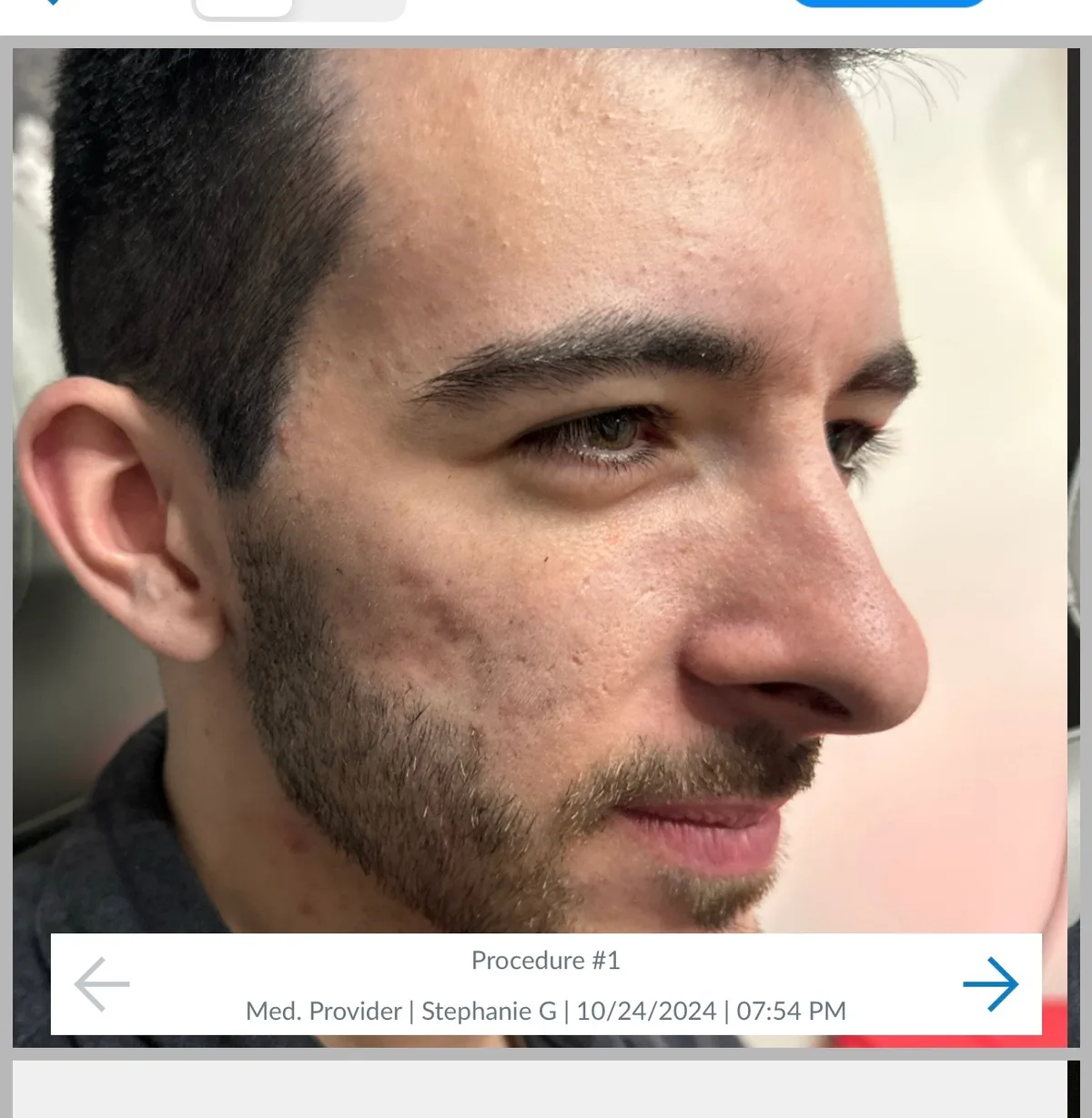
Baseline patient skin profile showing textural roughness and acne scar pitting.
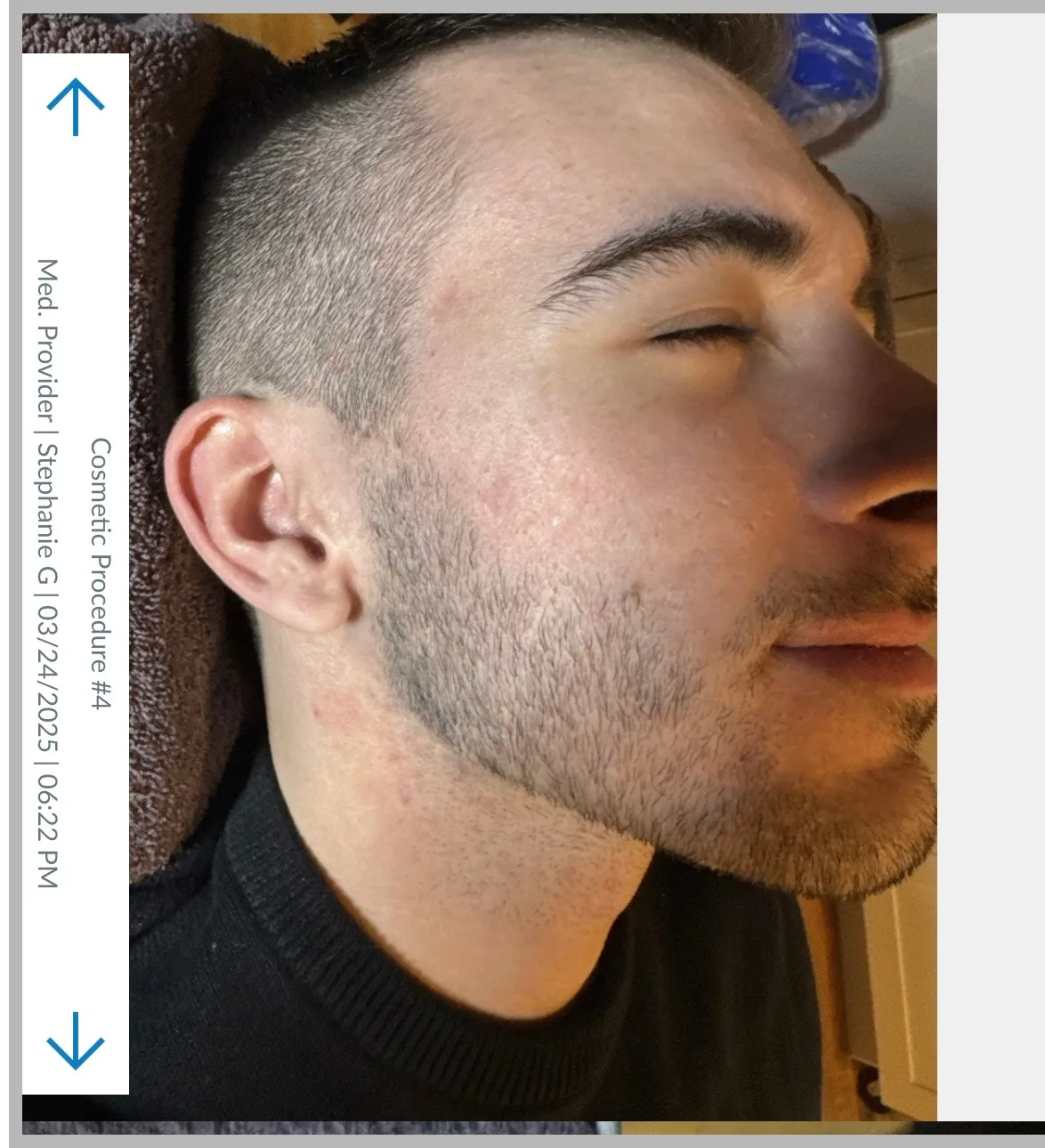
Post-treatment outcome showing restored skin smoothness, reduced pore diameter, and diminished scar depth.
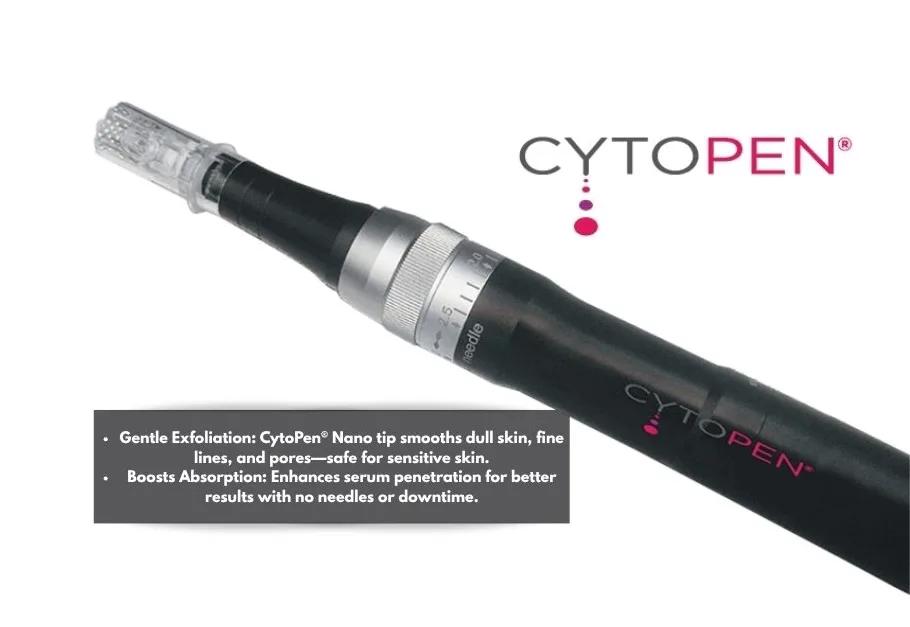
Cytopen medical microneedling device with sterile disposable needle cartridge for controlled dermal depth.
Clinical note: Individual results vary based on personal anatomy, dosage, and biological healing. Images reflect authentic clinical records without cosmetic retouching.
Comparative Analysis
Microneedling vs. Alternatives
Understanding the clinical differences in materials, onset times, duration, and pricing helps determine the right approach for your anatomic goals.
Standard Mechanical Microneedling (SkinPen / Cytopen)
- Energy Source
- None (pure mechanical puncturing)
- Depth Range
- 0.25mm - 2.5mm
- Primary Benefit
- Refines pore size, smooths fine lines, improves superficial texture
- Typical Cost
- $250-$450 / session
RF Microneedling (Morpheus8 / Sublative)
- Energy Source
- Bipolar Radiofrequency thermal energy
- Depth Range
- 1.0mm - 4.0mm (deep dermal & subdermal)
- Primary Benefit
- Deep acne scar remodeling, subdermal tissue tightening, jowl firming
- Typical Cost
- $650-$1,200 / session
Microneedling + PRP ('Vampire Facial')
- Energy Source
- Autologous growth factors & platelets
- Depth Range
- 0.5mm - 2.0mm
- Primary Benefit
- Accelerated cellular repair, doubled collagen production, reduced downtime
- Typical Cost
- $550-$850 / session
Find providers
Browse rated med spas by city
Microneedling questions
What is the difference between regular microneedling and RF microneedling?
Standard mechanical microneedling relies solely on physical needle punctures to trigger collagen synthesis in the upper dermal layers, making it ideal for mild texture, dullness, and fine lines. Radiofrequency (RF) microneedling delivers thermal heat directly through insulated or semi-insulated needle tips into the deeper reticular dermis. This thermal coagulation denatures old collagen and contracts tissue fibers, providing significantly greater skin tightening and deeper scar remodeling than mechanical needles alone.
What are the day-by-day microneedling recovery stages?
Day 1 (0-24 hrs): Skin looks and feels like a moderate sunburn; slight swelling and tightness are expected. Avoid washing for 4-6 hours, then apply only sterile hyaluronic acid. Day 2-3: Redness fades to a light pink or bronzed appearance; skin feels tight and dry. Day 4-7: Very fine micro-crusting or light flaking occurs as cellular turnover peaks. By Day 7, fresh, radiant skin emerges.
Can microneedling fix deep acne scars and large pores?
Yes. Microneedling is one of the most effective non-laser treatments for atrophic (depressed) acne scars, rolling scars, and enlarged pores. By physically breaking up fibrous scar tissue and stimulating new organized collagen bands, it gradually fills in scar valleys and tightens the follicular walls of pores over a series of 3 to 6 sessions.
Does microneedling hurt?
With a high-potency topical numbing cream applied for 20-30 minutes beforehand, microneedling is very tolerable. Most patients describe feeling a vibrating sensation and light scratchiness, with mild sensitivity over bony prominences like the forehead and cheekbones.
Educational information only — not medical advice. Consult a licensed provider about your specific situation.
For med spa owners
Own a med spa? Get on the register.
People compare providers here by rating and services. Make sure your listing is present, current, and correct. It's free.