PRP Facial
A Platelet-Rich Plasma (PRP) facial—widely popularized as the 'vampire facial'—is an advanced autologous regenerative therapy that combines medical microneedling with concentrated platelets drawn directly from your own blood. Because it utilizes your body's own biological signaling molecules, it carries virtually zero risk of allergic reaction or rejection.
During the procedure, a small vial of blood is drawn and spun in a specialized centrifuge to isolate the buffy coat layer—a platelet concentrate holding 3 to 7 times the baseline concentration of human growth factors (including PDGF, VEGF, TGF-beta, and EGF). When infused through fresh microneedling channels or micro-injected into thinning hair follicles, PRP dramatically accelerates cellular repair, promotes angiogenesis (new blood vessel formation), and multiplies new collagen synthesis.
Sessions
A clinical protocol typically consists of 3 to 4 sessions spaced 4 to 6 weeks apart, followed by an annual booster to maintain cellular vigor.
Downtime
1 to 2 days of sunburn-like redness and mild tightness. Interestingly, autologous platelets significantly reduce overall downtime compared to dry microneedling.
Results timeline
Noticeable luminous glow emerges within 7-10 days. Deep structural collagen rebuilding and follicle reactivation continue steadily over 3 to 6 months.
Typical cost
Nationally, PRP facials generally range from $550 to $1,000 per session. PRP hair restoration protocols typically range from $700 to $1,500 per treatment.
Credentials
Who performs it
PRP therapy involves phlebotomy and sterile blood handling. It must be performed by a licensed medical provider—such as a registered nurse (RN), nurse practitioner (NP), physician assistant (PA), or physician (MD/DO)—operating within a certified clinical environment adhering to OSHA bloodborne pathogen standards.
Before you book
Worth considering
- Hydration is key: drink plenty of water for 24-48 hours before your appointment to ensure an easy blood draw and rich plasma yield.
- Avoid anti-inflammatory medications (NSAIDs like ibuprofen, naproxen, Advil) for 7 days before and after treatment, as they inhibit platelet activation.
- Do not wash off the residual golden plasma for at least 4 to 6 hours after treatment to maximize epidermal absorption.
- Patients with active hematologic disorders, low platelet counts, or active infections are not candidates for PRP therapy.
Clinical Documentation
Non-Retouched · Practice RecordsClinical Results: Follicle Reactivation & Tissue Healing
Authentic clinical documentation demonstrating autologous growth factor stimulation and follicle density restoration.
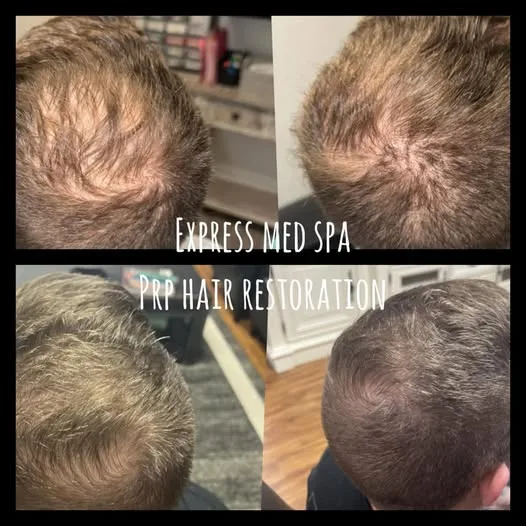
Patient outcome following a series of autologous PRP injections documenting restored hair follicle density.
Clinical note: Individual results vary based on personal anatomy, dosage, and biological healing. Images reflect authentic clinical records without cosmetic retouching.
Comparative Analysis
PRP Facial vs. Alternatives
Understanding the clinical differences in materials, onset times, duration, and pricing helps determine the right approach for your anatomic goals.
Autologous PRP (Platelet-Rich Plasma)
- Source
- Patient's own venous blood draw
- Active Mechanism
- Concentrated autologous growth factors (PDGF, VEGF, EGF)
- Biocompatibility
- 100% autologous (zero allergy risk)
- Avg Cost Per Session
- $550-$950
Standard Hyaluronic Acid / Peptide Serums
- Source
- Lab-synthesized topical serums
- Active Mechanism
- Superficial epidermal hydration and moisture retention
- Biocompatibility
- Synthetic/botanical (mild sensitivity potential)
- Avg Cost Per Session
- $250-$450
Exosome Therapy
- Source
- Umbilical/placental stem cell conditioned media
- Active Mechanism
- Extracellular vesicles carrying RNA and signaling proteins
- Biocompatibility
- Allogeneic donor source (strict lab testing)
- Avg Cost Per Session
- $800-$1,400
Find providers
Browse rated med spas by city
We don't currently have enough registered providers mentioning this treatment to display a directory.
PRP Facial questions
How does PRP work biologically to repair skin?
Platelets are the body's primary first-responders to injury. When concentrated and activated in the dermis, their alpha-granules degranulate and release potent cellular growth factors: Platelet-Derived Growth Factor (PDGF) stimulates cell replication and skin regeneration; Transforming Growth Factor-Beta (TGF-b) promotes matrix synthesis and collagen deposition; Vascular Endothelial Growth Factor (VEGF) creates new micro-capillaries to supply nutrients and oxygen; and Epidermal Growth Factor (EGF) accelerates epidermal cell closure. This biochemical cocktail supercharges healing.
Can PRP be used for hair restoration as well as the face?
Yes! PRP is widely used to treat androgenetic alopecia (male and female pattern hair loss) and diffuse hair thinning. When injected directly into the scalp around hair follicles, the growth factors stimulate dormant or miniaturized follicles, prolong the active anagen (growth) phase of the hair cycle, and increase hair shaft caliber over a 3-4 treatment series.
Does getting a PRP facial hurt?
The initial blood draw feels like a standard routine blood test pinprick. For the microneedling portion, a prescription-strength topical numbing cream is applied for 20-30 minutes, ensuring minimal sensation. Most patients report feeling only vibration and slight pressure.
Why is it important to avoid NSAIDs like ibuprofen before PRP?
Non-steroidal anti-inflammatory drugs (NSAIDs) such as ibuprofen, Advil, Motrin, and Aleve inhibit cyclooxygenase enzymes and impair platelet aggregation and activation. Since the entire therapeutic power of PRP depends on platelets activating and releasing their internal growth factors, taking NSAIDs can blunts the biological efficacy of your treatment. Acetaminophen (Tylenol) can be used instead if pain relief is needed.
Educational information only — not medical advice. Consult a licensed medical provider regarding your health history.
For med spa owners
Own a med spa? Get on the register.
People compare providers here by rating and services. Make sure your listing is present, current, and correct. It's free.