Chemical Peels
A chemical peel uses a scientifically balanced acidic solution applied topically to the skin to perform controlled chemo-exfoliation. By dissolving intercellular desmosomes (the microscopic glue binding dead stratum corneum cells together), the peel prompts damaged, hyperpigmented, and sun-weathered cellular layers to slough away, stimulating accelerated basal cell turnover and fresh collagen production.
Medical spas utilize peels spanning superficial (glycolic, lactic, salicylic), medium-depth (TCA and formulated blends like the VI Peel), and deep formulations. While light peels provide an instant radiance boost with minimal peeling, medium-depth peels are the gold standard for stubborn hormonal melasma, post-inflammatory hyperpigmentation (PIH), sun lentigines, and textural acne scarring.
Sessions
Light maintenance peels are often done in a series of 3-6 monthly sessions. Targeted medium peels (like VI Peel Precision Plus) typically require 1-3 sessions spaced 4-6 weeks apart.
Downtime
Varies by depth. Superficial peels cause minor flaking for 1-3 days. Medium-depth peels involve 3-5 days of visible sheet peeling starting around day 3.
Results timeline
Noticeably clearer, brighter, and refined skin texture emerges by days 7-10 once the peeling phase finishes. Pigment correction continues to improve over 4-6 weeks.
Typical cost
Light superficial peels range from $125 to $250. Formulated medium-depth medical peels (like VI Peel or Jessner's) typically range from $300 to $450 per treatment.
Credentials
Who performs it
Superficial peels can be applied by licensed medical aestheticians. Medium-depth chemical peels (containing higher percentages of TCA, retinoic acid, or phenol blends) require advanced medical training and are typically performed by registered nurses (RN), nurse practitioners (NP), physician assistants (PA), or physicians (MD/DO).
Before you book
Worth considering
- Golden rule of peeling: NEVER peel, pull, or scratch flaking skin sheets; allowing them to slough naturally prevents scarring and post-inflammatory hyperpigmentation.
- Discontinue retinoids (tretinoin/Retin-A), AHAs/BHAs, benzoyl peroxide, and waxing for 5-7 days before and after peeling.
- Patients with darker Fitzpatrick skin types (IV-VI) should seek customized self-neutralizing peels (like VI Peel) designed to treat pigment without causing rebound hyperpigmentation.
- Strict, daily broad-spectrum SPF 50+ is non-negotiable, as freshly exposed epidermal layers are exceptionally vulnerable to UV damage.
Clinical Documentation
Non-Retouched · Practice RecordsClinical Results: Melasma Clearance & Textural Refinement
Authentic clinical patient documentation demonstrating pigment lifting and skin tone evening with VI Peel Precision Plus.
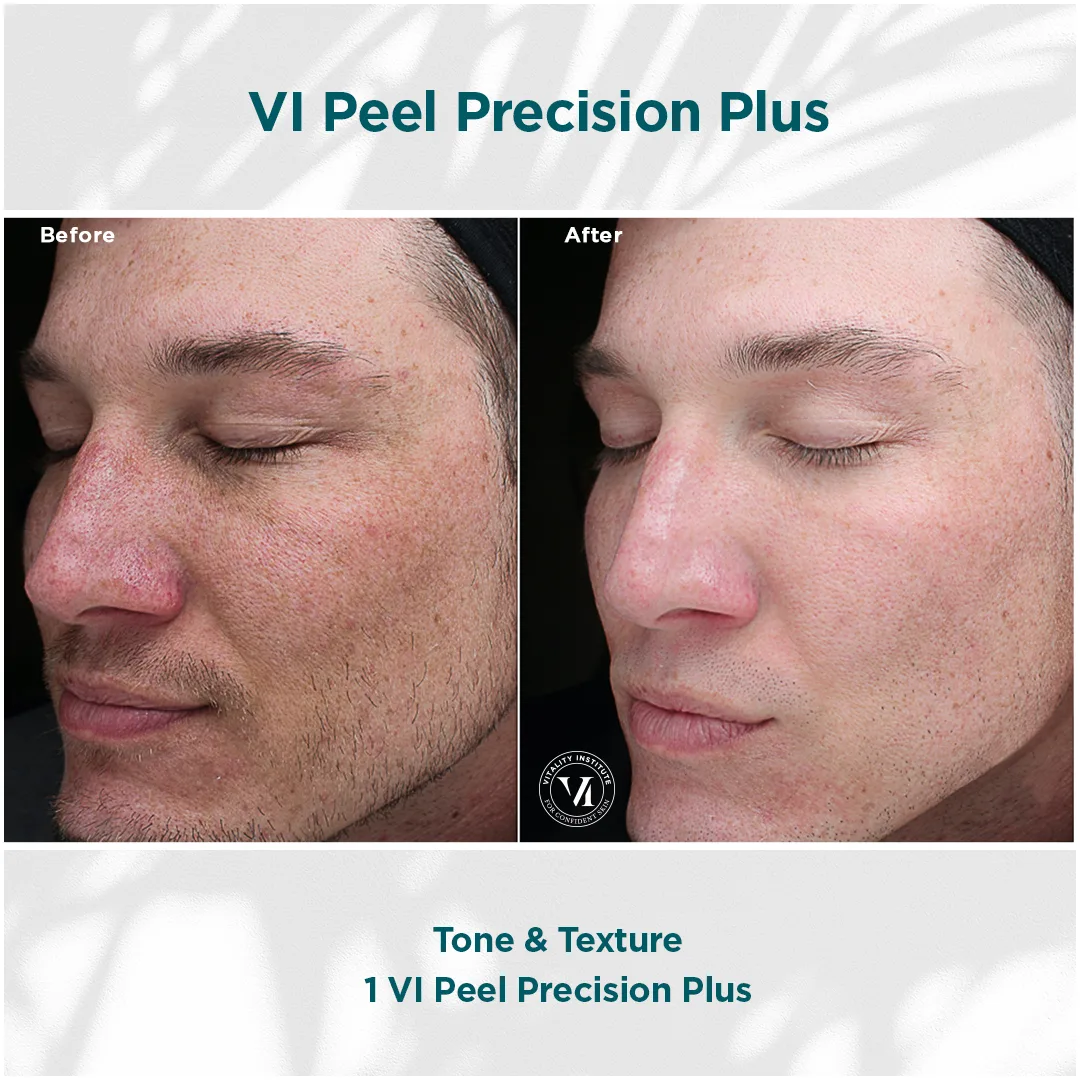
Patient outcome showing lifted sun damage, tightened pores, and radiant epidermal glow post-VI Peel.
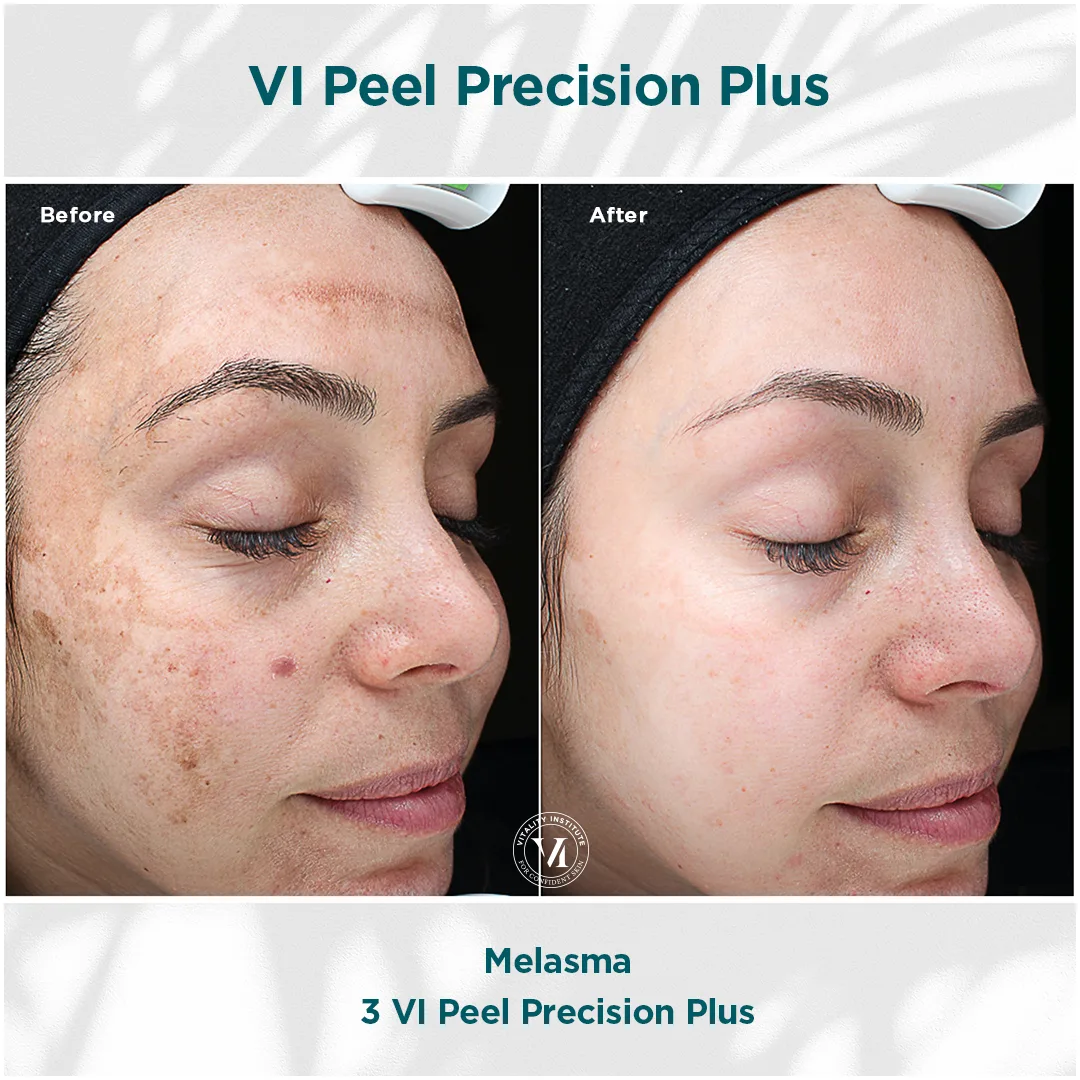
Targeted pigment clearing of dermal melasma across the cheeks and forehead after a curated peel protocol.
Clinical note: Individual results vary based on personal anatomy, dosage, and biological healing. Images reflect authentic clinical records without cosmetic retouching.
Comparative Analysis
Chemical Peels vs. Alternatives
Understanding the clinical differences in materials, onset times, duration, and pricing helps determine the right approach for your anatomic goals.
Superficial Peels (Glycolic / Salicylic 20-30%)
- Depth
- Stratum corneum to upper epidermis
- Peeling Intensity
- Light powder flaking or invisible exfoliation
- Downtime
- 0-2 days
- Best For
- Mild dullness, clogged pores, pre-event glow
- Avg Cost
- $125-$250
Medium-Depth Medical Peels (VI Peel / Modified Jessner / TCA 15-20%)
- Depth
- Full epidermis down to papillary dermis
- Peeling Intensity
- Noticeable sheet-peeling for 3-5 days
- Downtime
- 3-7 days
- Best For
- Hormonal melasma, sun damage, post-acne dark marks
- Avg Cost
- $300-$450
Deep Peels (TCA 35%+ / Phenol / Baker-Gordon)
- Depth
- Reticular dermis
- Peeling Intensity
- Heavy crusting, oozing, and intense edema
- Downtime
- 2-3 weeks
- Best For
- Severe perioral wrinkles, advanced actinic damage
- Avg Cost
- $1,500-$3,500
Find providers
Browse rated med spas by city
Chemical Peels questions
What are the day-by-day peeling stages for a VI Peel?
Day 1 (Application Day): The peel is applied in-clinic; skin appears slightly tinted or bronzed. You wash it off after 4 hours and apply the provided post-care towelette before bed. Day 2: Skin feels tight, glazed, and may appear slightly darker as pigment surfaces. Day 3-4: The peel begins! Sheet peeling typically starts around the mouth, chin, and nose where facial movement is highest. Day 5-6: Peeling spreads to the outer cheeks, forehead, and perimeter of the face. Day 7: Peeling is largely complete, revealing smooth, clarified, glowing skin.
Can chemical peels safely treat melasma on darker skin tones?
Yes, provided the proper formulated peel is chosen. Traditional high-concentration glycolic or heat-based laser treatments can trigger rebound hyperpigmentation in melanin-rich skin (Fitzpatrick types IV-VI). Formulated medium peels like the VI Peel Precision Plus pair TCA and retinoic acid with phenol (acting as an anesthetic), kojic acid, and hydroquinone, allowing pigment to lift safely without overheating melanocytes.
What happens if I pull or peel off flaking skin early?
It is critical that you never pull or pick peeling skin. Forcibly detaching skin that is not fully ready to slough can tear immature underlying epidermis, leading to prolonged redness, infection, permanent scarring, and post-inflammatory hyperpigmentation (PIH). If dangling skin bothers you, gently trim the edges with sterile small scissors rather than pulling.
Do chemical peels hurt?
During the initial application, you will feel warmth, tingling, and a prickly stinging sensation that lasts approximately 2-3 minutes. Handheld fans are provided to keep you comfortable. Formulations like the VI Peel include phenol, which acts as a self-numbing agent within 60-90 seconds, making the rest of the application completely pain-free.
Educational information only — not medical advice. Consult a licensed provider about your specific situation.
For med spa owners
Own a med spa? Get on the register.
People compare providers here by rating and services. Make sure your listing is present, current, and correct. It's free.