Dermal Fillers
Dermal fillers are injectable gels used to restore volume, soften deep folds, or refine facial contours. Most fillers used in modern medical spas are formulated with cross-linked hyaluronic acid (HA), a moisture-binding sugar molecule produced naturally by your body. When injected beneath the skin, the gel physically integrates into the tissue to restore structural support or sculpt features like the lips, cheeks, chin, and jawline.
People frequently seek fillers to address age-related volume loss—such as hollow under-eyes, flattened cheeks, or deepening nasolabial folds—or to achieve aesthetic refinement, like lip symmetry and chin projection. Because hyaluronic acid fillers can be precisely dissolved using the enzyme hyaluronidase, they offer a reversible, customizable treatment path.
Sessions
Most areas are treated in a single 30-60 minute appointment. An assessment touch-up can be scheduled 2-3 weeks later once swelling subsides.
Downtime
Minimal to moderate. Localized swelling, tenderness, and minor bruising are typical for 3-7 days. True settled results emerge around day 14.
Results timeline
Immediate volume is visible instantly, though post-injection edema temporarily exaggerates fullness. Longevity ranges from 6-12 months for lips and 12-18 months for cheeks and jawline.
Typical cost
Nationally, hyaluronic acid fillers range from $600 to $950 per standard 1.0 mL syringe. Half-syringes (0.5 mL) often cost $350-$500.
Credentials
Who performs it
Fillers are prescription medical devices requiring intricate understanding of three-dimensional facial anatomy, danger zones, and vascular architecture. Injections are performed by licensed medical practitioners—including registered nurses (RN), nurse practitioners (NP), physician assistants (PA), and cosmetic physicians (MD/DO)—working under medical director oversight.
Before you book
Worth considering
- Filler is gradually metabolized by the body, so maintaining results requires touch-up visits every 9-15 months.
- Overfilling too frequently can lead to filler migration; a conservative 'less is more' approach creates the most natural result.
- Hyaluronic acid fillers can be dissolved with hyaluronidase if adjustment or emergency reversal is needed.
- Avoid alcohol, ibuprofen, aspirin, fish oil, and vitamin E for 48 hours prior to minimize bruising.
Clinical Documentation
Non-Retouched · Practice RecordsClinical Results: Lip & Chin Contour Refinement
Authentic clinical outcomes documenting subtle volume enhancement, proportion balancing, and non-retouched outcomes.
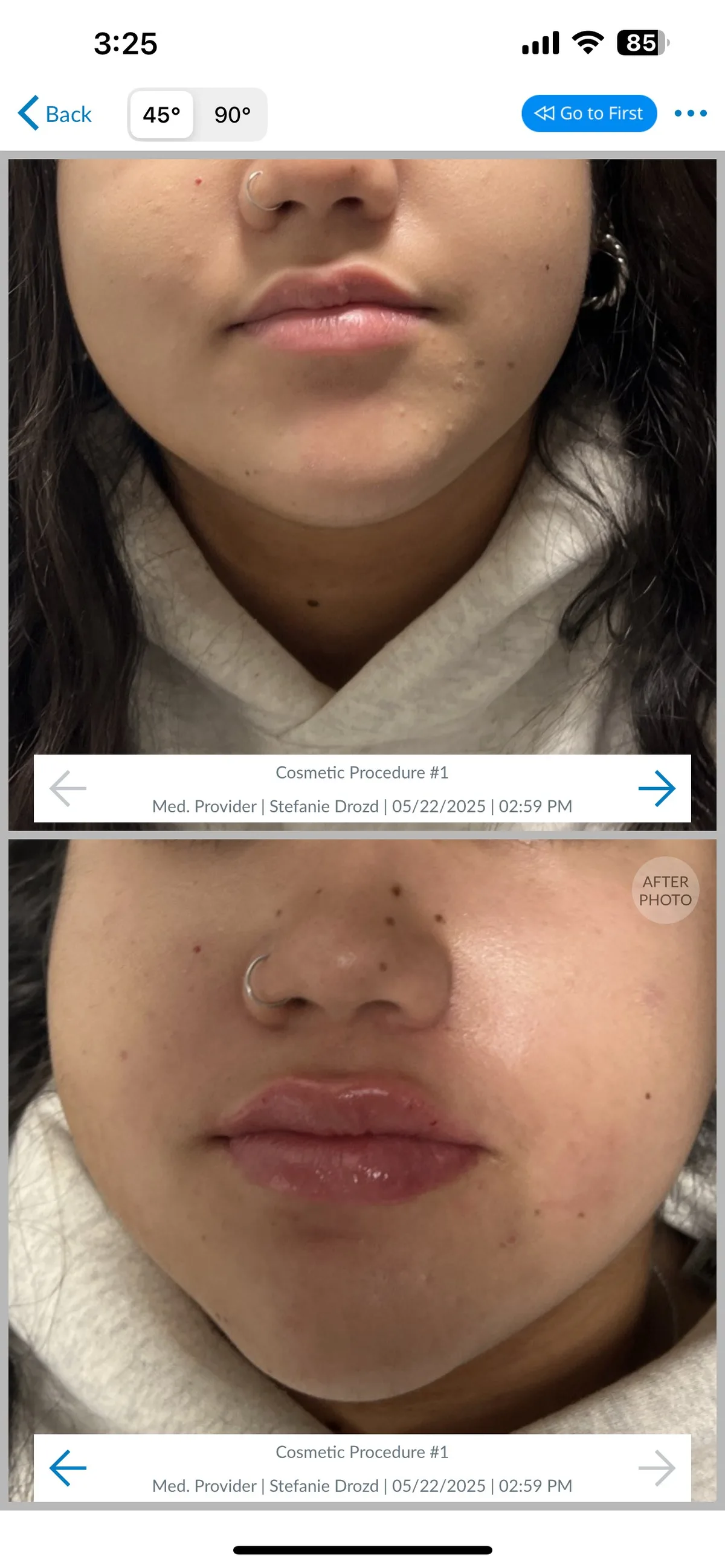
First-time patient lip enhancement using Revanesse Versa. Balanced lip symmetry and natural border definition.
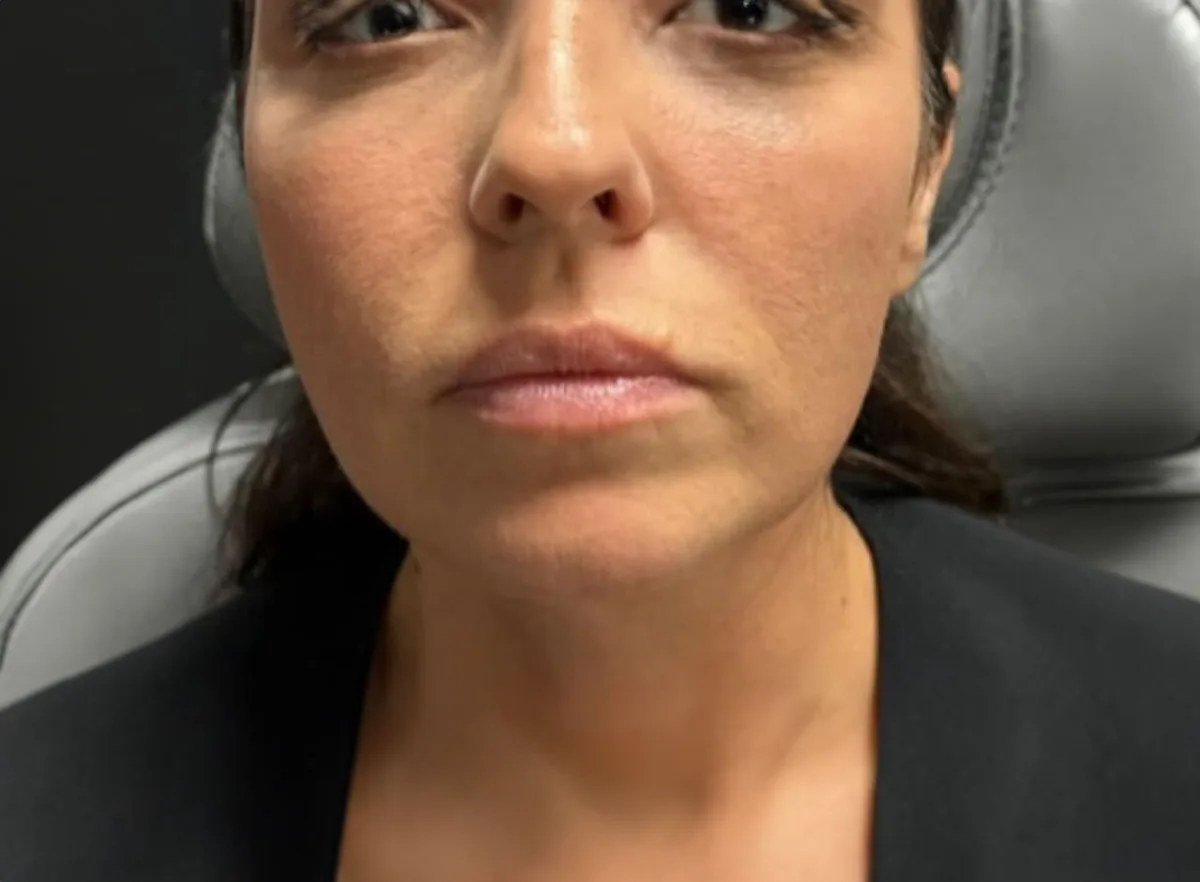
Baseline profile showing weak chin projection and subtle jowl shadowing.
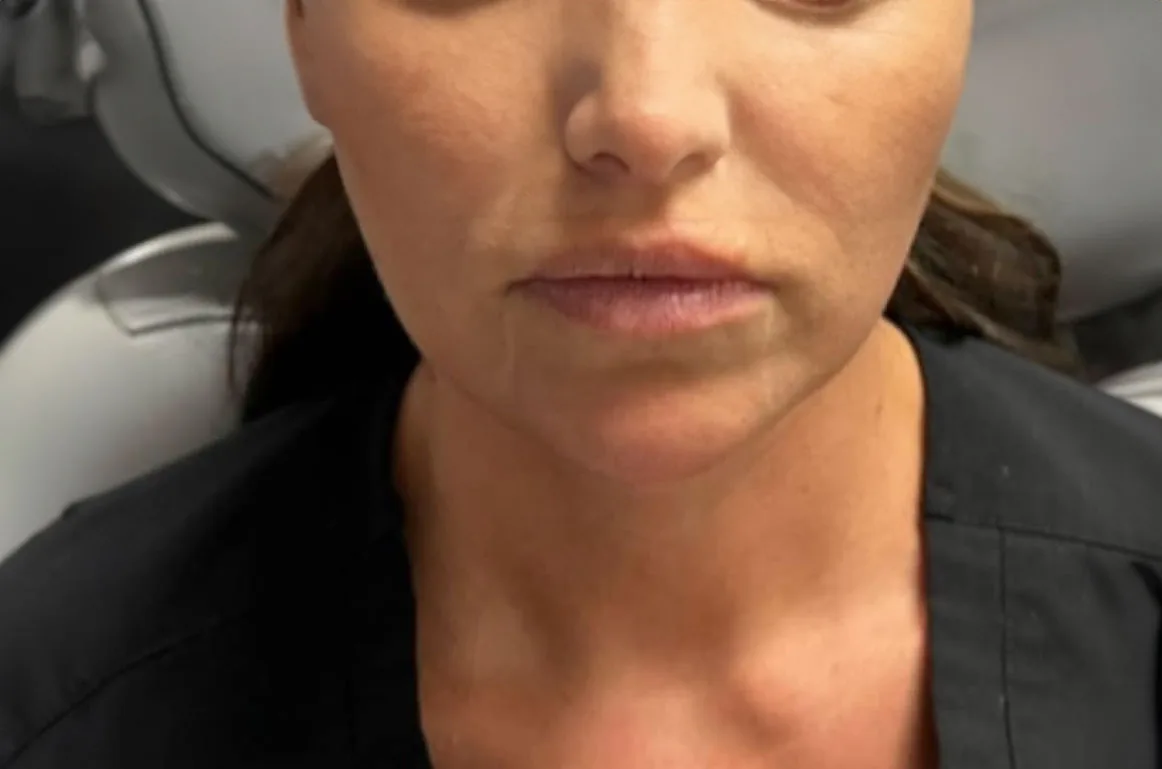
Post-treatment profile showing enhanced chin projection, elongated jawline, and smoothed pre-jowl sulcus.
Clinical note: Individual results vary based on personal anatomy, dosage, and biological healing. Images reflect authentic clinical records without cosmetic retouching.
Comparative Analysis
Dermal Fillers vs. Alternatives
Understanding the clinical differences in materials, onset times, duration, and pricing helps determine the right approach for your anatomic goals.
Revanesse Versa / Lips+
- Gel Characteristics
- Spherical particle technology, low hydrophilicity
- Swelling Tendency
- Minimal immediate post-injection swelling
- Ideal Zones
- Lips, subtle perioral smoothing, tear troughs
- Avg Cost Per Syringe
- $600-$800
Juvederm (Voluma / Ultra XC)
- Gel Characteristics
- Vycross & Hylacross technology, robust water attraction
- Swelling Tendency
- Moderate initial swelling over 48-72 hours
- Ideal Zones
- Cheek volume, deep nasolabial folds, chin projection
- Avg Cost Per Syringe
- $750-$950
Restylane (Kysse / Lyft)
- Gel Characteristics
- XpresHAn flexible cross-linking & firm NASHA matrix
- Swelling Tendency
- Low-to-moderate initial swelling
- Ideal Zones
- Natural lip flexibility (Kysse), high bone projection (Lyft)
- Avg Cost Per Syringe
- $700-$900
Find providers
Browse rated med spas by city
Dermal Fillers questions
Does lip filler hurt?
Discomfort is generally mild to moderate and very manageable. Med spas use several layers of comfort control: high-potency topical numbing ointment (BLT: benzocaine, lidocaine, tetracaine) is applied for 15-20 minutes beforehand; modern fillers (like Versa, Juvederm XC, Restylane Kysse) are pre-formulated with 0.3% lidocaine to numb tissue as the product is placed; and skilled injectors frequently use smooth, blunt-tip micro-cannulas or ice packs to minimize needle pinpricks.
How often should you get lip filler?
Most patients maintain natural-looking results by receiving a touch-up every 9 to 12 months. Injecting too frequently (such as every 3-4 months) can overwhelm the anatomical tissue planes of the lip border (the vermilion border) and lead to filler migration into the cutaneous upper lip. Waiting until the majority of the prior filler integrates or softens ensures clean, crisp anatomy.
Should I get a half syringe (0.5 mL) or a full syringe (1.0 mL)?
A half syringe (0.5 mL) contains approximately 1/10th of a teaspoon of gel. It is ideal for first-time patients who want subtle hydration, minor asymmetry correction, or a conservative enhancement. A full syringe (1.0 mL) provides noticeable plumping, crisp border definition, and balanced upper-to-lower lip ratios without looking overdone.
Can hyaluronic acid fillers be dissolved if I'm unhappy?
Yes. One of the greatest safety advantages of hyaluronic acid fillers is that they can be dissolved using an injectable enzyme called hyaluronidase. If filler is uneven, overfilled, placed incorrectly, or if a vascular complication arises, hyaluronidase breaks down the cross-linked bonds within 24 to 48 hours.
What causes filler migration and how can it be avoided?
Filler migration occurs when gel shifts outside its intended anatomical pocket—most commonly seen as a 'filler mustache' above the top lip. It is primarily caused by injecting too much volume too quickly, injecting in an improper tissue plane, or excessive post-treatment mechanical pressure. Choosing a conservative injector who understands lip architecture is the best preventative measure.
Educational information only — not medical advice. Consult a licensed provider about your specific situation.
For med spa owners
Own a med spa? Get on the register.
People compare providers here by rating and services. Make sure your listing is present, current, and correct. It's free.