Botox
Botox is an injectable made from a purified form of botulinum toxin type A. A provider injects small amounts into specific facial muscles, where it temporarily relaxes the muscle so it contracts less. That softening is what smooths the dynamic lines that form when you frown, squint, or raise your eyebrows. It's one of the most common minimally invasive cosmetic treatments, and the same molecule is also used for certain medical concerns like chronic migraine and excessive sweating.
People often consider Botox when frown lines, forehead creases, or crow's feet start to look etched even at rest. It appeals to adults who want a subtle, reversible option before thinking about anything more involved, since results fade on their own over a few months. A consultation is where a qualified provider reviews your facial anatomy, goals, and health history to explain whether it fits, what a natural result looks like, and any reasons to hold off.
Sessions
Most areas are treated in a single quick visit, often 10-20 minutes. Many people return every 3-4 months to maintain results as the effect gradually wears off.
Downtime
Little to none for most people. You can usually return to normal activities the same day, though tiny bumps, redness, or bruising at injection sites can appear briefly.
Results timeline
Movement starts to soften within 3-5 days, with the fullest effect around 10-14 days. Results typically last about 3-4 months before muscle movement gradually returns.
Typical cost
Nationally, Botox is often priced around $10-$20 per unit, or roughly $200-$600 per treated area per session. Cost varies by provider, region, and treatment plan.
Credentials
Who performs it
Botox is a prescription product, so it's administered under medical oversight. In practice, injections are often performed by a registered nurse (RN), nurse practitioner (NP), or physician assistant (PA), with a supervising physician (MD or DO) involved. Exactly who can inject, and how directly a doctor must supervise, varies by state law. When comparing providers, it's reasonable to ask who performs the injections, what their training is, and who oversees the practice medically.
Before you book
Worth considering
- Results are temporary, so maintaining them means repeat visits a few times a year.
- Ask about the injector's training and credentials, and confirm who provides medical oversight at the practice.
- Use a consultation to discuss your goals, medical history, and any medications or conditions before booking treatment.
- Pricing by the unit versus by the area can make quotes hard to compare, so ask how a provider charges.
- Metabolic rate, intense daily workouts, and zinc levels can influence how rapidly your body clears the neurotoxin.
Clinical Documentation
Non-Retouched · Practice RecordsClinical Results: Upper Face Muscle Softening
Authentic clinical documentation demonstrating dynamic line relaxation in the forehead with natural brow movement preserved.
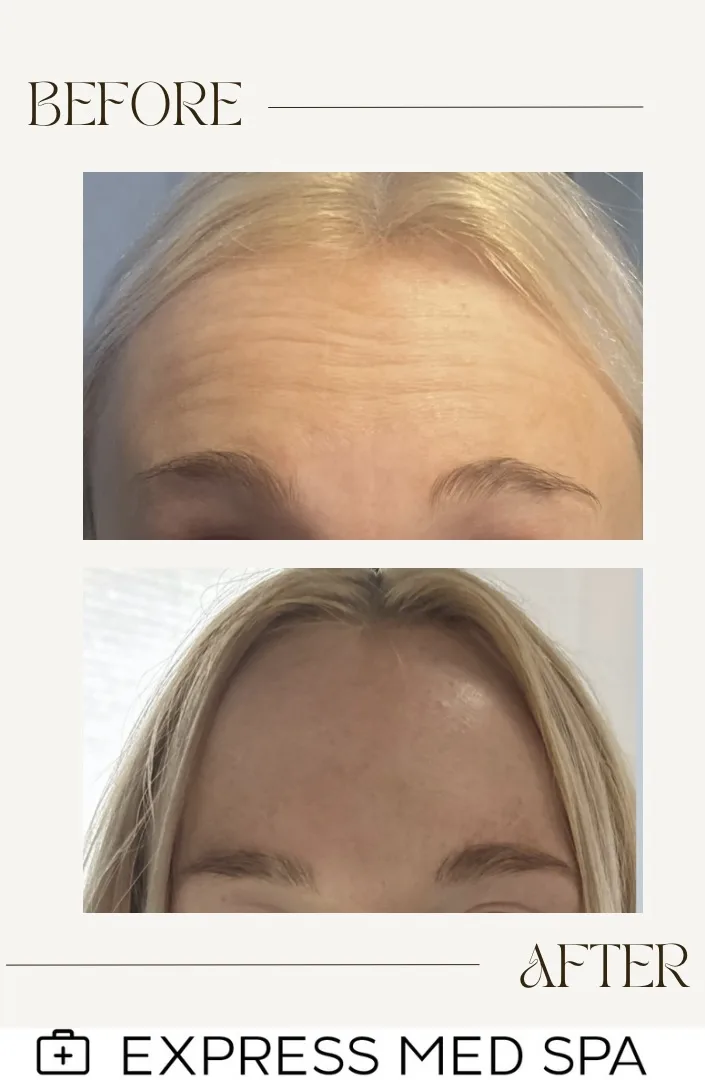
10 units to frontalis (forehead). Note preserved natural brow symmetry and softening of horizontal lines.
Clinical note: Individual results vary based on personal anatomy, dosage, and biological healing. Images reflect authentic clinical records without cosmetic retouching.
Comparative Analysis
Botox vs. Alternatives
Understanding the clinical differences in materials, onset times, duration, and pricing helps determine the right approach for your anatomic goals.
Botox (onabotulinumtoxinA)
- Structure
- 900 kDa complex with accessory proteins
- Onset
- 3-5 days
- Avg Longevity
- 3-4 months
- Pricing
- $12-$20 / unit
Xeomin (incobotulinumtoxinA)
- Structure
- 150 kDa purified core ('naked' neurotoxin)
- Onset
- 3-4 days
- Avg Longevity
- 3-4 months
- Pricing
- $10-$16 / unit
Letybo (letibotulinumtoxinA)
- Structure
- 900 kDa advanced Asian & European standard
- Onset
- 2-3 days
- Avg Longevity
- 3-4 months
- Pricing
- $9-$15 / unit
Dysport (abobotulinumtoxinA)
- Structure
- Variable molecular size, higher diffusion spread
- Onset
- 2-3 days
- Avg Longevity
- 3-4 months
- Pricing
- $4-$6 / unit (requires ~2.5x units for equivalent dose)
Find providers
Browse rated med spas by city
Botox questions
What makes Botox fade faster?
Several physiological and lifestyle factors can cause Botox to wear off sooner than the typical 3-4 months. A very high metabolic rate, frequent high-intensity cardiovascular or heavy resistance training (such as daily HIIT or marathon running), and hyperthyroidism cause muscle neurotransmitters to regenerate more quickly. Additionally, low dietary zinc levels have been correlated in clinical studies with shorter neurotoxin duration, which is why some providers recommend oral zinc supplementation prior to treatments.
How many units of Botox will I need?
Dosing is tailored to your unique muscle strength and movement patterns. As a general benchmark: horizontal forehead lines typically require 10-20 units; glabellar frown lines ('11s') take 15-25 units; and crow's feet around both eyes take 12-24 units total (6-12 units per side). Men and individuals with dense facial musculature often require higher dosing.
Does Botox hurt?
Most people describe it as a quick pinch rather than real pain. The needles are very fine, and each injection takes only a moment, so the whole visit is usually brief. Some providers apply ice or a topical numbing cream first if you're sensitive. Any soreness afterward is typically mild and short-lived.
How long does Botox last?
Results typically last about 3-4 months for most people. After that, muscle movement gradually returns and lines reappear, which is why many people schedule maintenance visits 3-4 times a year. A provider can give you a realistic estimate based on your muscle tone and lifestyle.
Will Botox make my face look frozen?
Not necessarily. A natural, still-expressive result is a common goal and comes down to dosing and placement. A frozen look usually reflects too much product or poor technique rather than the treatment itself. Skilled injectors aim to soften specific muscles while leaving others active.
Is Botox safe?
Botulinum toxin injectables have been used cosmetically for years and are FDA-approved for several uses when given by a trained, licensed professional. As with any medical procedure, side effects are possible, which is why verified medical oversight and a thorough health-history review matter.
Educational information only — not medical advice. Consult a licensed provider about your specific situation.
For med spa owners
Own a med spa? Get on the register.
People compare providers here by rating and services. Make sure your listing is present, current, and correct. It's free.