Dermaplaning
Dermaplaning is a gentle physical exfoliation treatment performed with a sterile, medical-grade 10-gauge surgical scalpel held at a precise 45-degree angle. As the blade glides across taut skin, it meticulously skims away the outermost layer of dead stratum corneum cells alongside fine vellus hair ("peach fuzz"), leaving the complexion ultra-smooth, bright, and receptive to skincare active ingredients.
Because it requires no chemical acids, downtime, or peeling, dermaplaning is a favorite entry-level aesthetic treatment before major events. It creates an impeccably smooth canvas for flawless makeup application and dramatically boosts transdermal absorption of serums, peptides, and hydrators.
Sessions
Takes approximately 30-45 minutes. Many clients schedule a session every 4 to 6 weeks to align with the natural epidermal turnover cycle.
Downtime
Zero downtime. Mild transient flushing may appear for 1-2 hours immediately following the session.
Results timeline
Immediate glowing radiance and tactile softness. Results typically remain optimal for 3 to 4 weeks until vellus hair and cellular buildup gradually regenerate.
Typical cost
Nationally, standalone dermaplaning typically ranges from $75 to $175 per session. When added as a booster onto a HydraFacial or enzyme peel, it is often $40 to $75.
Credentials
Who performs it
Dermaplaning is typically performed by a licensed medical aesthetician under the supervision of a medical director, or by a clinical registered nurse (RN). Practitioners must hold certified training in surgical blade handling and sterile draping.
Before you book
Worth considering
- Important safety rule: Dermaplaning should NEVER be performed directly over active cystic acne or open pustules, as the blade can spread bacteria.
- Myth debunked: Vellus hair will NOT grow back thicker, darker, or coarser; blade cutting does not alter the hair follicle's biologic structure.
- Sun protection is imperative: fresh epidermal layers are temporarily more sun-sensitive, requiring broad-spectrum SPF 30+ daily.
- Can be paired effectively with hydrating sheet masks, LED light therapy, or gentle chemical peels for compound results.
Clinical Documentation
Non-Retouched · Practice RecordsClinical Treatment & Precision Blade Technique
Authentic clinical photograph capturing medical blade angle and sterile epidermal exfoliation technique.
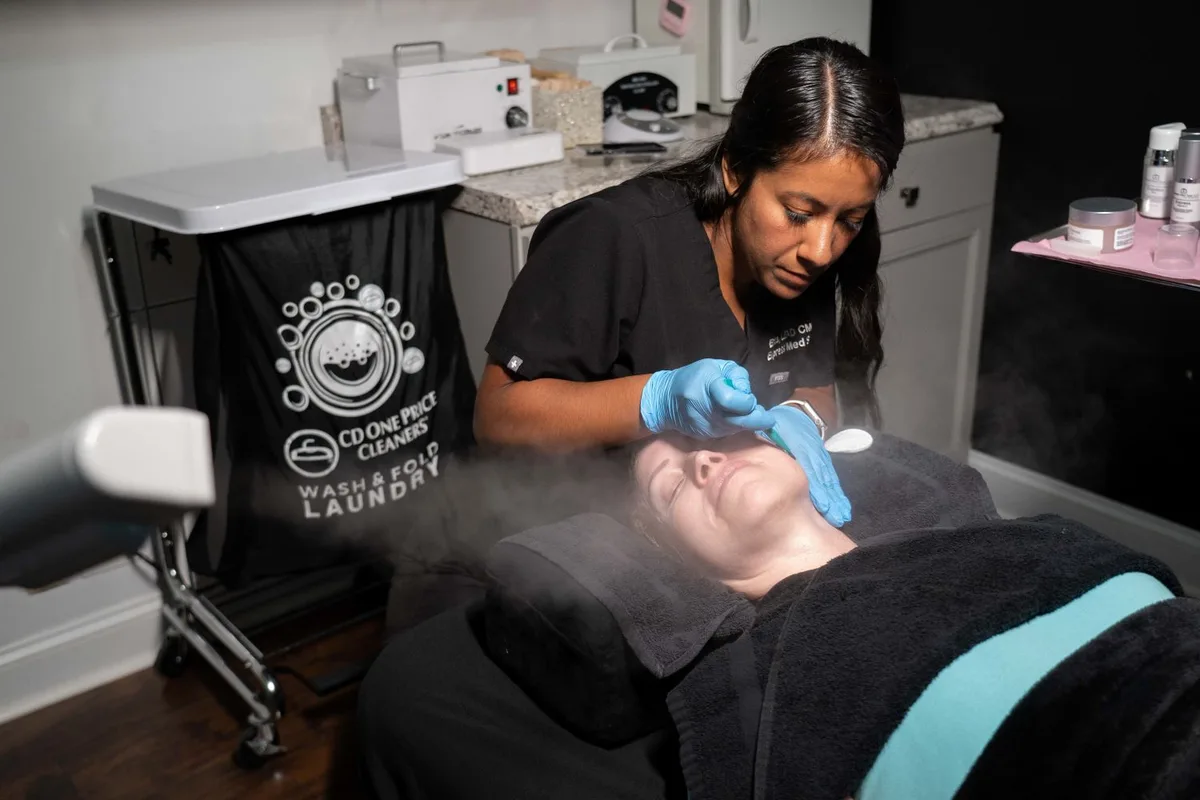
Sterile 45-degree blade exfoliation removing cellular debris and vellus hair.
Clinical note: Individual results vary based on personal anatomy, dosage, and biological healing. Images reflect authentic clinical records without cosmetic retouching.
Find providers
Browse rated med spas by city
We don't currently have enough registered providers mentioning this treatment to display a directory.
Dermaplaning questions
Does dermaplaning cause acne breakouts?
Dermaplaning itself does not cause acne; in fact, clearing away cellular debris and excess oil buildup often helps prevent comedones and clogged pores. However, if dermaplaning is performed across active inflammatory acne, cystic lesions, or pustules, the blade can nick the lesions and spread bacteria (Cutibacterium acnes) across the face, causing a post-treatment flare. Qualified aesthetic providers will carefully navigate around active blemishes or recommend waiting until an active breakout calms before proceeding.
Will my facial hair grow back darker or thicker?
No, this is a universal biological myth. Dermaplaning removes fine vellus hair ("peach fuzz"), not coarse terminal hair. The hair follicle beneath the skin is completely unaffected by the blade at the surface. When the hair begins to emerge a few weeks later, the freshly cut ends have a blunt edge which may feel temporarily coarse to the fingertips, but it does not grow back thicker, darker, or with increased density.
How often should you get dermaplaning done?
Every 4 to 6 weeks is the ideal cadence. This matches the skin's natural 28-to-40-day cellular renewal cycle, allowing the epidermis sufficient time to rejuvenate before receiving another deep mechanical exfoliation.
Can dermaplaning be combined with other treatments?
Yes! Dermaplaning is often combined with a HydraFacial, mild lactic or glycolic chemical peel, or hyaluronic acid infusion. Removing the stratum corneum barrier allows active serums to penetrate much deeper and perform with enhanced efficacy.
Educational information only — not medical advice. Consult a licensed medical aesthetician about your skin type.
For med spa owners
Own a med spa? Get on the register.
People compare providers here by rating and services. Make sure your listing is present, current, and correct. It's free.